What You Need to Know Before Buying a Coffee Table
How to choose the right shape, size, and style for a coffee table that fits your lifestyle.
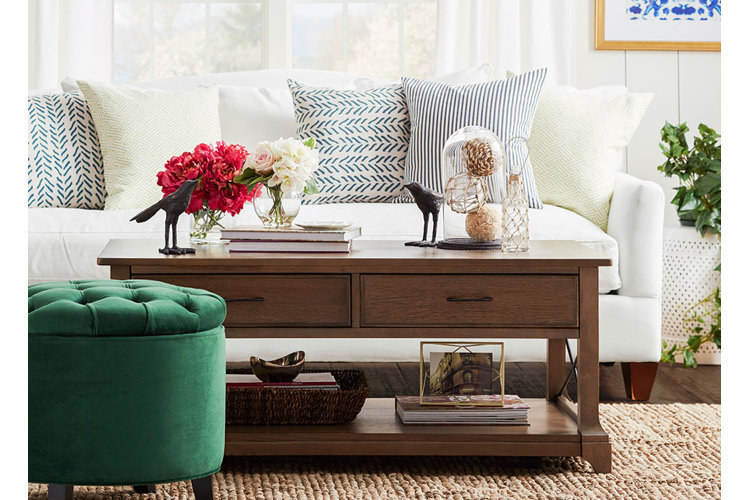
Functional, decorative, and smack dab in the middle of everything, your coffee table is the anchor of your living room—but with endless options, how do you decide on such a front-and-center piece? To help narrow things down, we’re compiled everything you need to find the table of your dreams.Shop All Coffee Tables ›
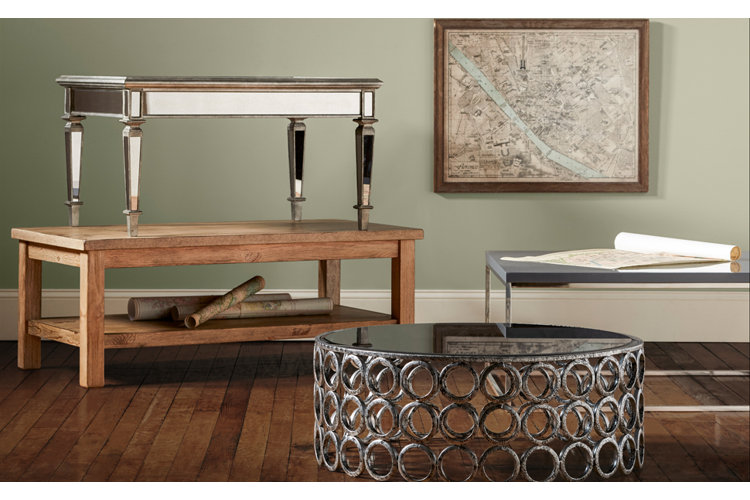
1. Make material decisions.
Coffee tables are crafted from all sorts of beautiful materials—iron, glass, you name it. To pick the one that’s right for you, first consider three things: the overall aesthetic of your room, your color palette, and how it’ll be used. Will it be purely decorative? (Try glass!) Hold books or serve as foot rest? (Think: sturdy wood or soft upholstery). Here, we outline all your options.
Wicker & Rattan
With a laidback style and lightweight feel, wicker and rattan tables are perfect for eclectic, boho aesthetics. Move it around as free-spirited guests see fit, but think twice before snacking over it—while the woven fibers make it durable, they also create hard-to-clean nooks and crannies. Shop All Rattan & Wicker Coffee Tables ›
Glass-Topped
For ample surface area in a small space, look to a glass coffee table; it’s see-through quality will keep a room from feeling too cramped of cluttered. Have children or pets? While glass tables are the easiest surface to clean, keep in mind they also have sharp edges and can be probe to shattering. Shop All Glass Coffee Tables ›
Wood
Solid and sturdy, wood tables can easily hold stacks of books, intricate vignettes, tired feet, and food and drinks. But before you kick back with the movie snacks, be sure to treat your table right—wood tables should be sealed to prevent stains, scratches, and discoloration. If your budget permits, opt for a style with inlaid polished stone; it’s virtually stain and scratch-proof. Shop All Wood Coffee Tables ›
Acrylic
Like glass, acrylic tables take up little to no “visual room” due to their translucent nature. Though many associate the stylish material with more modern spaces, acrylic tables can be styled to fit any aesthetic, from glam to timeless and traditional. Plus, it’s smooth surface is easy to clean and hard to scratch. Shop All Acrylic Coffee Tables ›
Upholstered
An alternative approach to the classic coffee table, a large, upholstered ottoman can pull double duty as a table—simply add a tray or two for food and beverages—and extra seating. Super soft, this is a great option for those with young children.
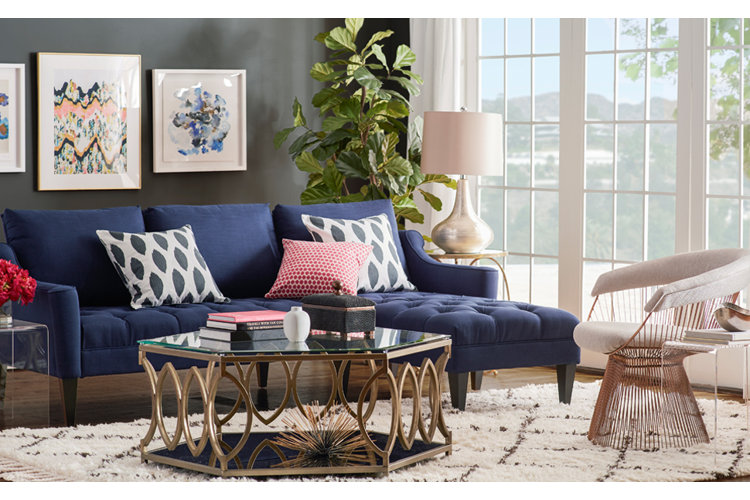
2. Think about shape.
When deciding on the shape of your coffee table, think about the shape of your room—is it small and narrow? And how about the pre-existing furniture in your space? Do you want your table to mirror the shape and style of your furnishings or juxtapose them? Here, we break down the benefits of all your geometric options.
Circular
In tight quarters, a circular coffee table is easy to navigate around and fits nicely with furnishings like love seats and L-shaped sectionals. Entertain a lot? Circular coffee tables allow for everyone to gather around and aid in circulation when there’s lots of seating at hand. Shop All Round Coffee Tables ›
Rectangular
Great for larger rooms, rectangular coffee tables are best paired with long, large sofas. With ample surface space for food and drinks, a rectangular table is great choice if your space acts as your home’s central gathering spot. Shop All Rectangular Coffee Tables ›
Square
Square coffee tables work well to unify seating areas that would otherwise look too spaced out. If your room is on the more compact side, however, avoid square-shaped coffee tables as they can amplify the small-room effect. Shop All Square Coffee Tables ›
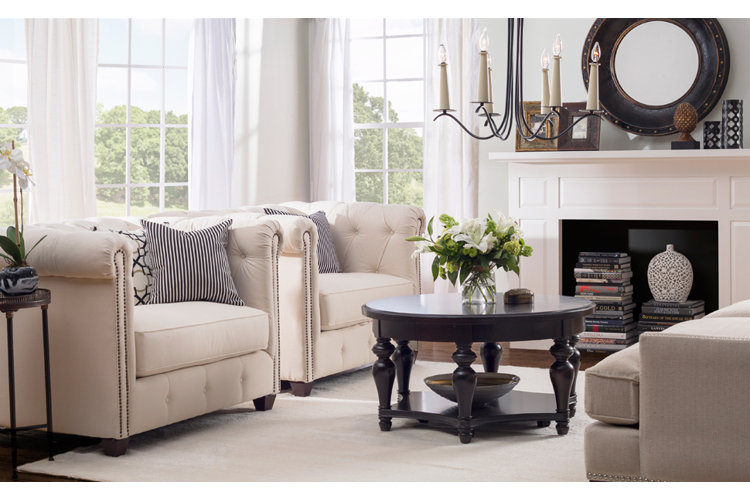
3. Size it right.
The height, width, and visual weight of your coffee table can have a major effect on the overall look and feel of your room. To keep from dwarfing surrounding furniture (or vice versa), scale and size should be top of mind—pairing a dainty coffee table with overstuffed couch, for example, will throw off proportions and functionality. To get the size right, read on for our fool-proof measuring tips.
Length
Your coffee table should be approximately two-thirds the length of your sofa—any larger than that, and it runs the risk of dwarfing your couch and making the entire room look disproportionate.
Placement
Ideally, there should always be 12 to 18 inches of space between your coffee table and the furniture surrounding it. This allotted space will allow people to pass through the room easily, while still keeping your table within arm’s reach from seating.
