Lampshade Types: The Styles You Need to Know
Find your perfect shade.
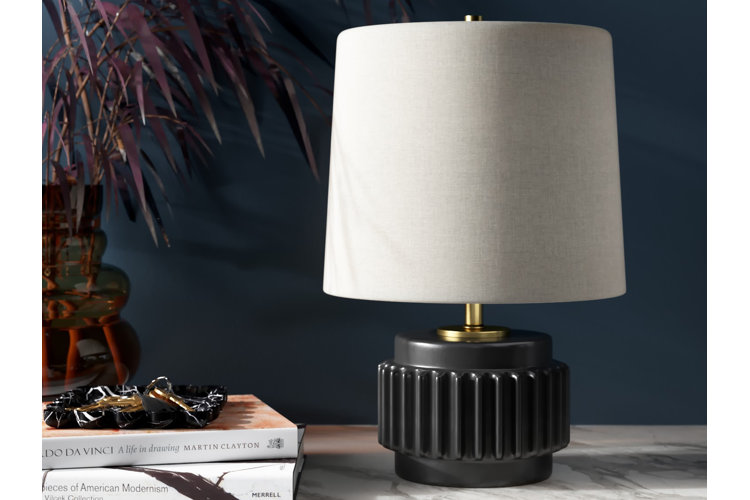
Sometimes a simple update like swapping out our lampshades for new styles can give us that fresh feeling we crave in our homes.. Create a whole new look in any room by making easy lampshade swaps – perhaps a new shade shape, color, or material? Read more below about different lampshade types to help you find the shape and material that work best within your space.
Jump ahead to the info you need most:
Shade Shape
Shade Material
How to Measure Your Lampshade
Pair Your Lampshade With the Right Base
Parts of the Lampshade
Types of Shade Shapes
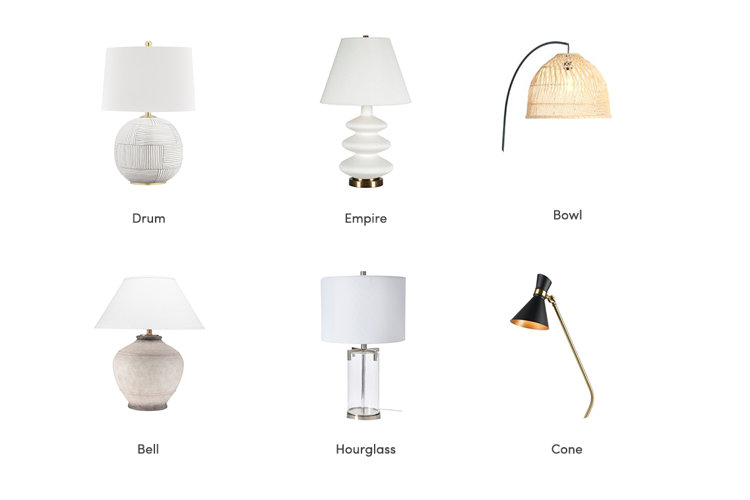
Drum: This lampshade has a wide and tall cylindrical shape that allows light to funnel equally through the top and bottom openings. A drum lampshade creates both focused and ambient lighting, making it a great shade choice for offices and social spaces alike.
Empire: The empire shade is one of the most popular and standard shade choices. The diameter of the top of an empire shade is typically half of the diameter of the bottom of the shade, creating a flared appearance. Most of the light flows downward, making this lampshade a great choice for focused task lighting.
Bowl: A bowl shade is a wider and rounder version of the empire shade, pushing more light downward. This shade type is great for floor lamps that illuminate a specific area like above a reading nook, sofa, or desk space.
Bell: A bell shade is a more dramatic version of the empire shade, with a sweeping flare that creates movement and looks similar to a skirt. Bell lampshades are a popular choice for living rooms and entryways as they highlight the surfaces they live on.
Hourglass: An hourglass shade looks like it sounds, with a shape that gets thinner in the middle of the shade, like an hourglass. This shape can be subtle with a slight inversion or it can be more dramatic, with a lot of curve and movement. Hourglass lampshades make ideal accent lighting – place one on top of a credenza or dresser.
Cone: Cone shades have a sleek, modern appearance and are easily recognizable by their cone-shaped appearance. These lamps are ideal for both floor lamps and task lighting as they cast light more directly than a standard empire or drum shade.
Height: Make sure the height of the shade you choose is one-third of the overall height of the lamp. Check that the shade covers the fittings and bulb underneath. You don’t want to take away from the base design or create an imbalance.
Width: The width of the shade should be 2x the width of the base of the lamp. This rule isn’t a must – especially if you have a unique shade base – but it’s a good place to start.
How to Pair Your Lampshade With the Right Base
When it's time to start styling and pairing your lampshade with a base, there are some simple design rules you can follow for guidance. The most popular bases are: round, candlestick, and square/angular.
- Round bases pair best with a round or geometrically shaped shade.
- Candlestick bases pair best with pretty much any shape: round or angular.
- Square or angular bases pair best with a shade that is also square or rectangular.
Parts of the Lampshade
Lampshade types and styles aren't the only thing you need to know when picking out your shade. Here’s a breakdown of the anatomy of a lamp, so you know all the mechanics, from the basics to the more technical parts.
Shade: The fabric or other material that is placed around the bulb to guide light flow and add decor is the shade. This is typically wrapped around a frame to hold its shape (unless you’re working with a metal lamp).
Fitter: This part of the shade is on the inside; it’s what clips directly to the lightbulb to keep the shade in place. There are a few different types of fitters to choose from, depending on the bulb shape. The most common fitters are spider, screw-on, and Uno.
Finial: A finial is a decorative cap that clips on the top of a shade to help keep it in place. Finials aren’t a necessity, unless you are using a spider fitter.
Ready to re-style your lamps?
