How to Pick a Transitional Chandelier
Which one is right for your room?
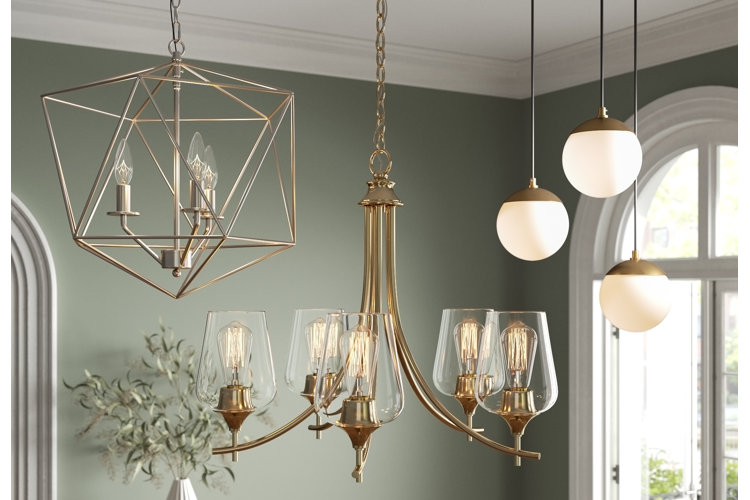
Transitional chandeliers can easily be paired with any decor. They combine the sleekness of modern style with the ornate details of traditional fixtures. Transitional chandeliers are simple but sophisticated. You won’t see any overly fussy details or harsh industrial designs.
The Makeup of a Transitional Chandelier
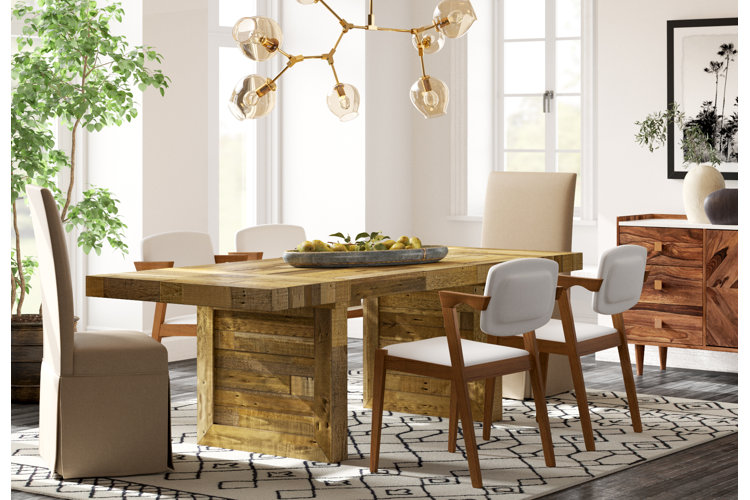
When it comes to materials, transitional chandeliers have elements of metal, glass, and wood. Bronze is one of the most popular metal finishes, along with brass, chrome, nickel, and copper. We’re also into gold, matte black, and silver – you can never go wrong with these neutrals. For glass chandeliers, the style is all in the details. You'll notice clear, frosted, and seeded versions, which are equally versatile. Characteristics of transitional chandeliers range widely between beaded, wrought iron, rope, and crystal.
Transitional Chandelier Designs
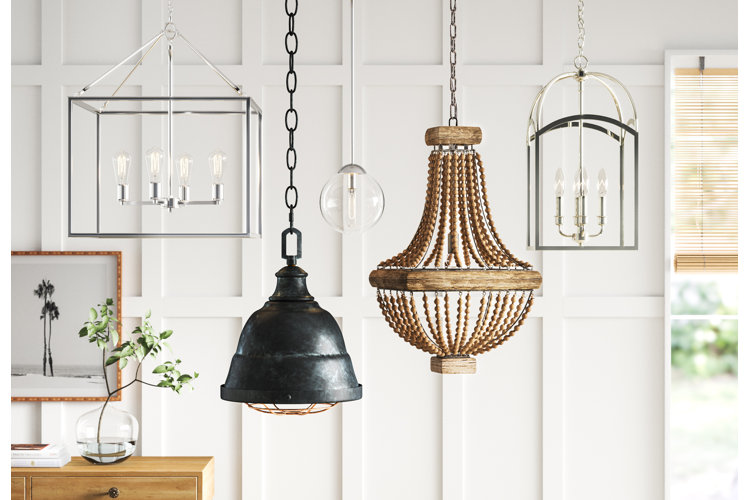
Transitional chandeliers are grouped into five core designs: candle, shaded, lantern, sputnik, and statement.
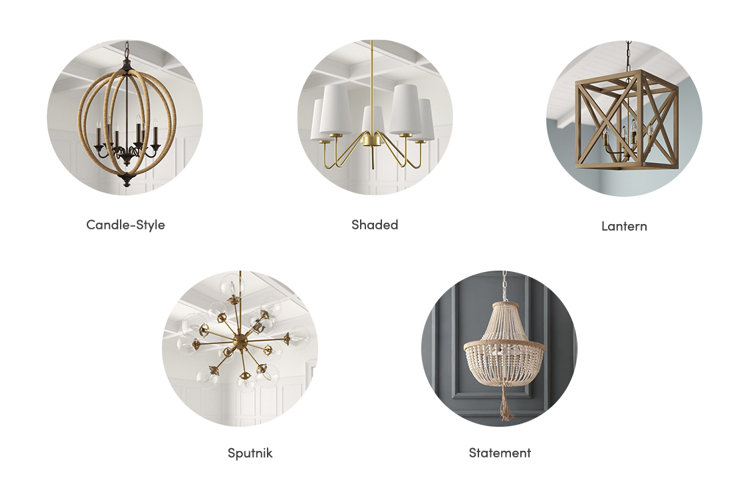
Candle-style chandeliers have at least four arms with a light resembling a candle at each end. They're versatile and can fit into a home with rustic, traditional, or glam undertones. Tiered options are popular and give off more light than single-tier versions.
Shaded chandeliers are similar to candle-style chandeliers, but each arm has a small shade over the lightbulb. These are also called drum chandeliers because they look like a snare drum.
You can spot a lantern chandelier by the square silhouette around the lights. Lantern chandeliers come in square, rectangular, globe, and geometric shapes.
Sputnik chandeliers aren’t just for modern aesthetics. Their streamlined design makes traditional rooms feel fresh. They are made from chrome or nickel and have simple bulbs on each arm.
Statement chandeliers can make a bold impression. They work well in a dining room because you don’t have too many decor elements competing for attention. Statement chandeliers come in a variety of shapes and materials – from beaded empire options to bronze wagon-wheel designs.
Thought chandeliers only lived in dining rooms? Guess again. We love swapping out traditional light fixtures with chandeliers for a surprising twist. Think: above your bed, coffee table, kitchen island, or in your bathroom. Style tip: Place two mini chandeliers above matching nightstands for something unexpected.
What Size Chandelier Should You Buy?
To figure out the right size transitional chandelier for your room, measure the length and width of the room in feet. Add those two numbers together. Use the sum as the width of your chandelier in inches. For example, if your room is 18' x 20', add those together to get 38', and your new transitional chandelier should be 38" wide at most.
For smaller rooms like bathrooms, walk-in closets, and home offices, choose a mini or small chandelier (14" – 20" wide). Bedrooms, dining rooms, and kitchen islands are great for medium-size chandeliers (21" – 26" wide). A larger room like the living room or master bedroom is a great space for large chandeliers (27" – 34" wide). For even larger spaces, like foyers or great rooms, oversize chandeliers (over 35" wide) are the perfect fit.
A Few Tips to Remember
Your chandelier should hang at least 7' or higher above the floor and no lower than 30" – 36" above a table or counter island. Chandeliers should be 12" shorter than the length of your dining or coffee table. So if your table is 42" wide, subtract 12" to get the ideal chandelier width of 30".
If you're placing your chandelier in a bathroom or other moist environment, remember to select a wet-rated chandelier.
Ready to shop?
