4 Steps to Mixing Wood Tones Like a Designer
We'll show you simple ways to elevate your space.
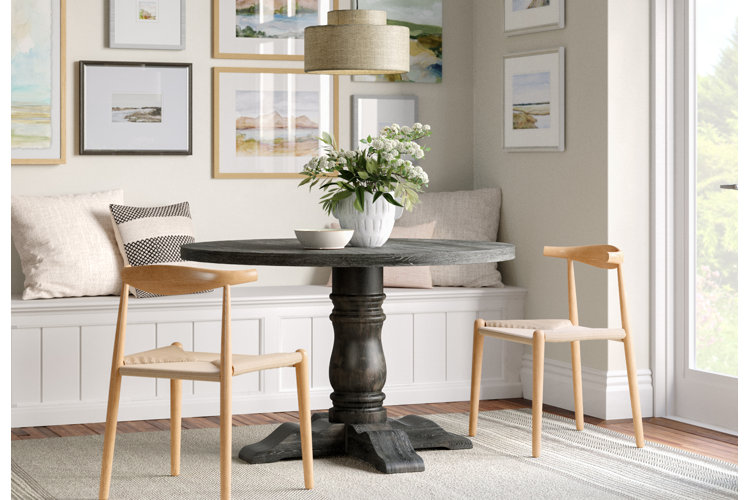
We love stepping into a room where mixing wood tones is done just right. Too many wood pieces in the same tone can make a space feel flat, but when wood tones are mixed and matched, your room will come alive with texture and life. It can be tricky to figure out wood tones that are cohesive, so keep reading below for our four easy steps for blending and mixing wood tones organically.
Step 1: Identify the Dominant Wood Tone
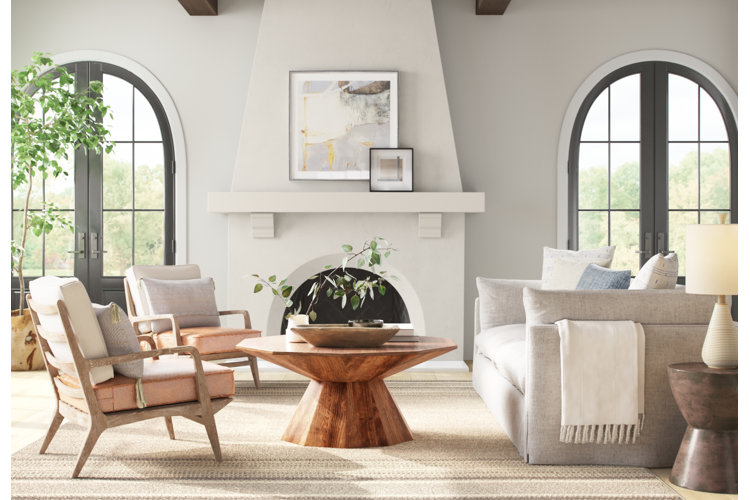
The key to mixing wood tones is to begin with a strong foundation. To do this, identify the dominant wood tone or tones in the room. If you have wood floors, cabinetry, or built-ins, those will be the dominant tone. If not, the dominant tone will be the room's largest piece of wood furniture such as the dining set or coffee table.
The dominant tone will either be warm, cool, or neutral. Warm tones look like sunlight. Think: walnut, white oak, cherry, and maple with an oil-based finish. Cool tones look like gravel or concrete. Think: bleached ash and maple with a water-based finish. Neutral tones are usually one yellowy shade with no undertone. Think: cane or blackwood.
After finding the dominant wood tone, look closely at the wood to determine its undertones. The undertones are important, because these are the shades you'll be using and incorporating into your design. To do this, look for the palest tone in the wood grain. It can be helpful to step back and look at the wood from a distance or take your glasses off. A few common undertones are red, yellow, purple, and green. In the photo above, you'll notice orange undertones in the chair, pale yellow undertones in the sideboard, and almost no undertone in the neutral wood flooring.
Step 3: Complement or Contrast the Tones
When you're mixing wood tones, we recommend creating a complementary or contrasting space rather than working toward a matching palette. Wood finishes that almost match but aren't quite close enough can end up looking like a mistake or haphazard. A variety of either complementary or contrasting tones looks like a deliberate design choice.
To get the wood tones to complement each other, match the undertones from one piece to the dominant tones in another. For example, if you have mahogany or cherry floors with warm reddish undertones, pair them with furniture that has a warm dominant wood, like a white oak headboard.
To contrast the wood, keep things bold so that two dominant wood tones in similar shades will not have to compete with one another. For example, if you have light oak floors, pair them with furniture that has a dark wood dominant tone, like a cherry sideboard. Contrasting warm and cool dominant tones will create visual interest through the various shades and layers of wood.
For both complementary and contrasting tones, consider mixing and matching the grain size or the patterns in the wood – look at the stripes, swirls, and flames. Woods with a high grain visibility give off a more rustic or casual vibe; woods with a low grain visibility have a more formal or polished aesthetic.
Balance is another important piece in the puzzle of mixing wood colors. Once you introduce a tone into the room, you'll want to disperse it throughout the space to make it look intentional. The complementary or contrasting tones don't just need to be shown off through furniture. Consider a wooden tray for the coffee or side table or place wooden sculpture beads in the built-ins. Set wood picture frames on a bookcase. Hang a wall mirror with a wood frame over a sideboard or console table in the entryway.
It's also good to create balance by breaking up similar wood styles when you can. If your dining set is just a little too close in tone to the wood floors, roll out an area rug to define the two. Choose soft, textured pieces to balance the wood tones such as a bouclé sofa or genuine leather ottoman.
Ready to start designing?
